

Announcing the 2026 Thaler-Tversky Research Grant Winners
The Roman Family Center for Decision Research is delighted to announce the recipients of the 2026 Thaler-Tversky Independent Research Grant for Emerging Scholars
Endowed by Nobel laureate Professor Richard Thaler in honor of the late Amos Tversky, this annual award provides up to $2,500 to support innovative, early-stage behavioral science research led by University of Chicago PhD students and postdoctoral researchers.
This year’s recipients include Jake Embrey, principal researcher at the Roman Family Center for Decision Research (RF-CDR); Jiabi Wang, PhD student in Behavioral Science at RF-CDR; and Aaron Leonard, PhD student at the Kenneth C. Griffin Department of Economics.
Their proposed projects advance our understanding of the role of technology, changing perceptions, and behavioral interventions in human decision making and well-being. The Roman Family Center for Decision Research is proud to support these outstanding researchers as they address timely questions and key issues facing individuals and communities.
Learn more about their proposed projects below, and join us in congratulating the 2026 Thaler-Tversky Independent Research Grant winners!
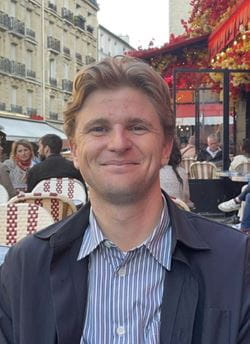
Jake Embrey
Principal Researcher, Roman Family Center for Decision Research
Faculty Advisor: Dan Bartels
Embrey’s research examines how using AI impacts the satisfaction people gain from mental work. By applying theories of cognitive effort, the research aims to determine whether AI use enhances or diminishes the intrinsic value people derive from mental labor. It is predicted that moderate AI use may boost satisfaction, while full automation will significantly reduce the satisfaction derived from mental work.
Jiabi Wang
PhD Student in Behavioral Science, Roman Family Center for Decision Research
Faculty Advisors: Ayelet Fishbach
Wang’s research explores why consumers perceive more change from the past to the present than from the present into the future. She aims to refine theory and process evidence through new experiments, addressing mechanisms, information symmetry, and practical impacts, to show how this bias influences important consumer judgments and decisions.
Aaron Leonard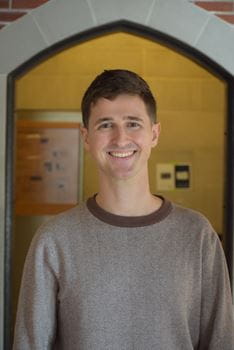
PhD Student, UChicago Kenneth C. Griffin Department of Economics
Faculty Advisors: Leonardo Bursztyn
Leonard’s research tests how restricting mobile gambling affects economic, mental health, and behavioral outcomes among Kenyan motorcycle taxi drivers. Using a custom app, it compares full blocks, group versus individual interventions, partial restrictions, and spending limits to evaluate effectiveness, demand for self-control, and belief changes about quitting, with follow-ups to assess the persistence of impacts.
- By
- June 10, 2026
- Roman Family Center for Decision Research