
Customer Capital Is Increasingly Important
A Q&A with Chicago Booth’s Amir Sufi about accounting for the value of customer relationships.
{PubDate}
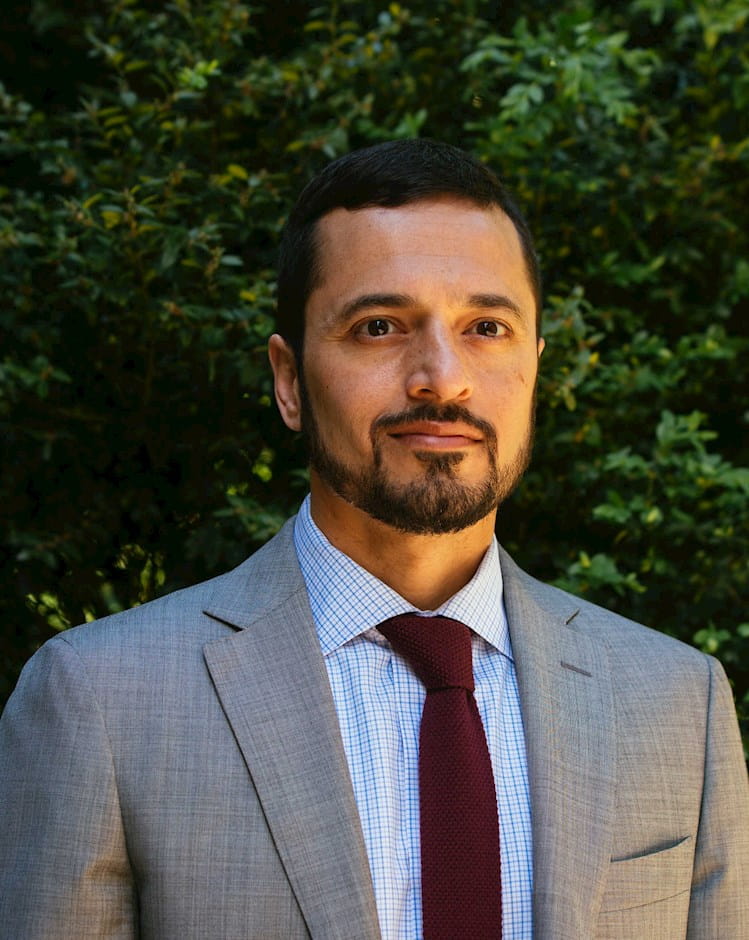
Amir Sufi is the Bruce Lindsay Distinguished Service Professor of Economics, Finance, and Public Policy at the University of Chicago Booth School of Business. He is also a Research Associate at the National Bureau of Economic Research, and co-director of the NBER Research Program on Corporate Finance. He was elected as a Fellow of the Econometric Society in 2022, and as a fellow of the American Academy of Arts and Sciences in 2024. Professor Sufi was awarded the 2017 Fischer Black Prize by the American Finance Association. His expertise lies within the fields of finance and macroeconomics, and he is currently researching topics related to intangible capital and corporate finance. He teaches courses related to leveraged finance, private credit, distressed debt investing, and corporate restructuring. He obtained his Bachelor’s Degree from the Walsh School of Foreign Service at Georgetown University in 1999, and he earned a PhD in economics from the Massachusetts Institute of Technology in 2005. He has been on the faculty at Chicago Booth since 2005.
Corporate finance; financial intermediation; intangible capital; leveraged finance; private credit
"Information Asymmetry and Financing Arrangements: Evidence from Syndicated Loans," Journal of Finance (2007).
"Creditor Control Rights and Firm Investment Policy," Journal of Financial Economics (2009).
"The Consequences of Mortgage Credit Expansion: Evidence from the U.S. Mortgage Default Crisis," Quarterly Journal of Economics (2009).
"The Political Economy of the U.S. Mortgage Default Crisis," American Economic Review (forthcoming).
"House Prices, Home Equity-Based Borrowing, and the U.S. Household Leverage Crisis," American Economic Review (forthcoming).
For a listing of research publications, please visit the university library listing page.

Chicago Booth’s Amir Sufi discusses the rise of private capital.
{PubDate}
Chicago Booth’s Amir Sufi explains the importance of “customer capital.”
{PubDate}A Q&A with Chicago Booth’s Amir Sufi about accounting for the value of customer relationships.
{PubDate}